Beyond the ejection fraction: Detecting Subclinical Cardiotoxicity Early with the global longitudinal strain (GLS) Echo
Global Longitudinal Strain (GLS) is a measure of myocardial deformation that quantifies the relative shortening of the left ventricle along its long axis (from base to apex) during the cardiac cycle.
It is expressed as a percentage change in myocardial length relative to its original length. Because the heart muscle shortens during contraction (systole), GLS is typically represented as a negative number.
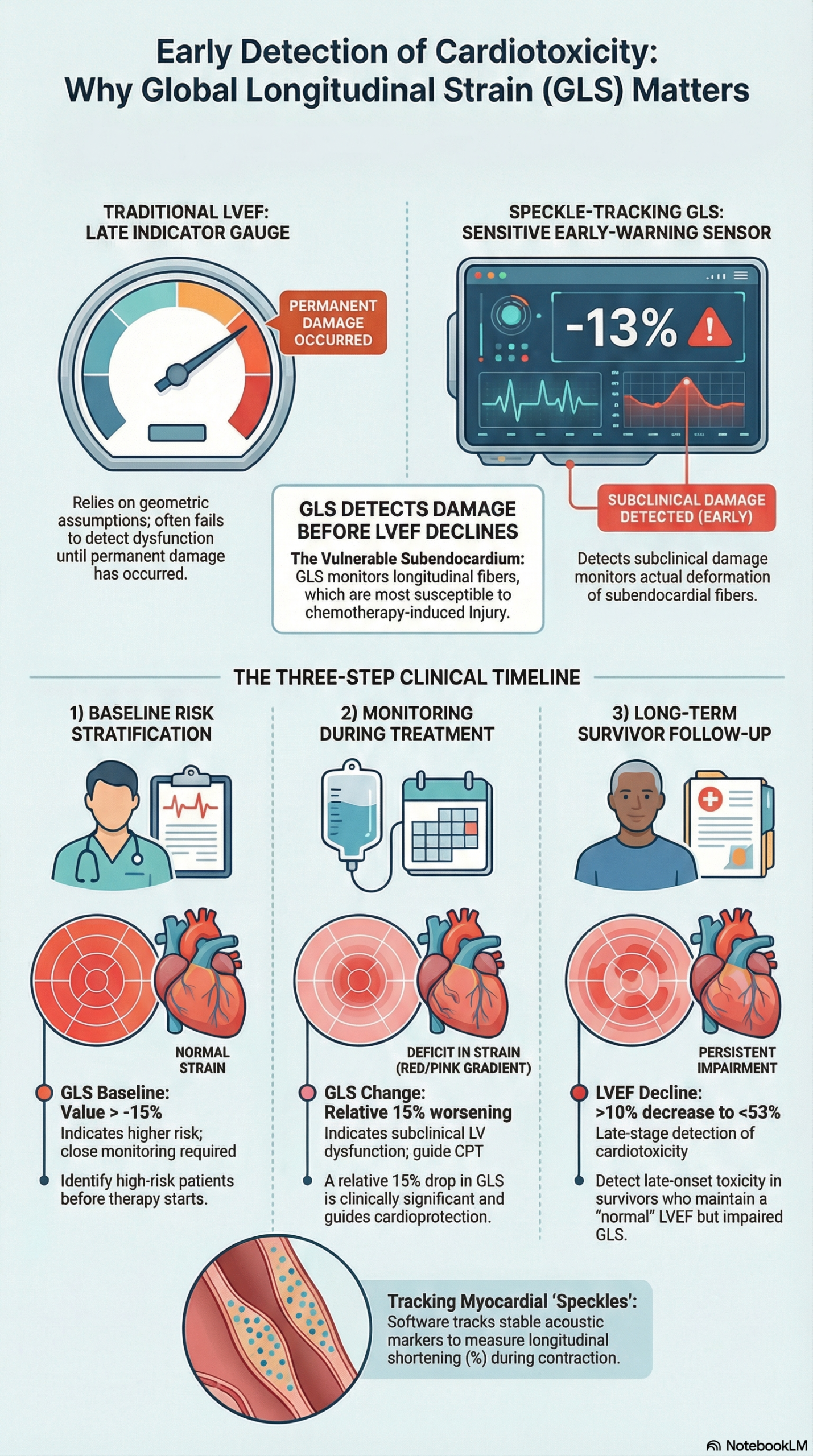
Generally, a -16% would be accepted, if this number increases – means less negative – for ex, -12% considered impaired.
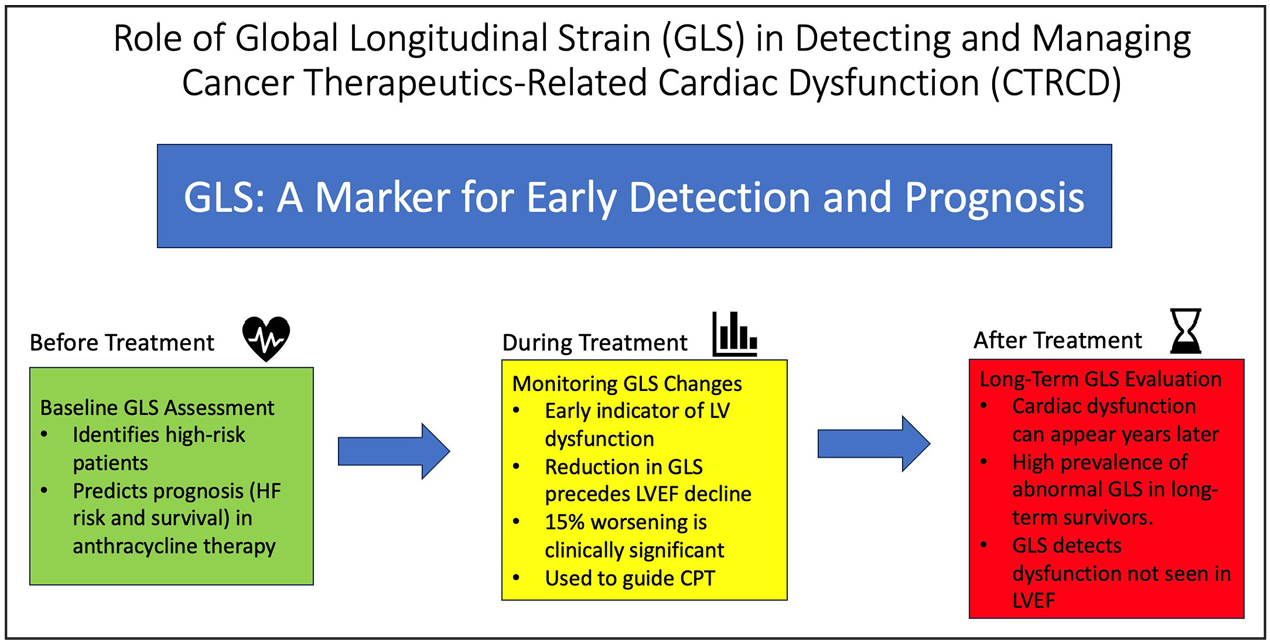
Identifying an isolated GLS decline allows for the initiation of neurohormonal blockade, which has been linked to higher follow-up LVEF and better overall cardiac recovery.
GLS is highly sensitive to changes in the subendocardial fibers, which are often the first to be affected by cardiac disease or cardiotoxic therapies.
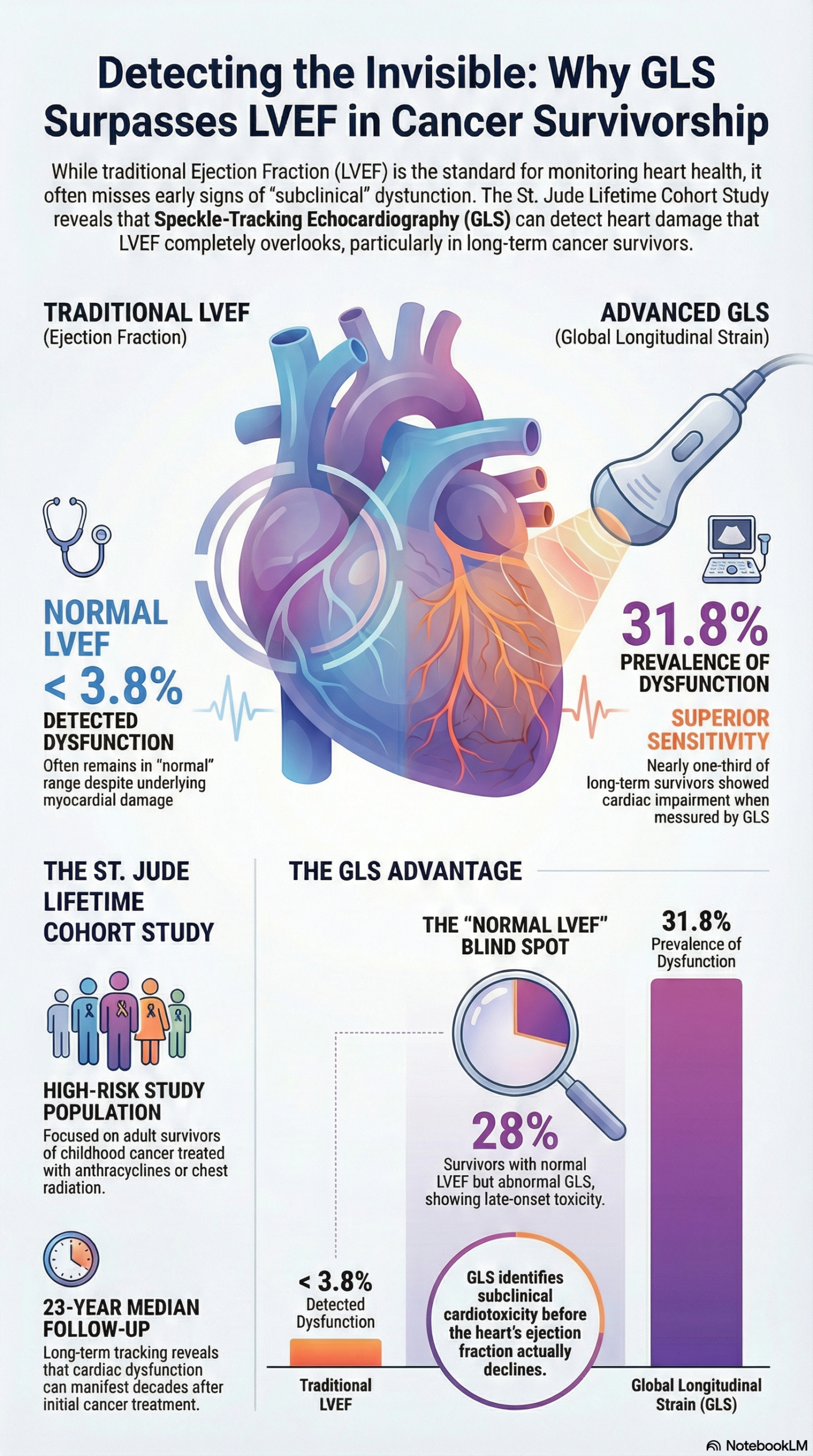
It serves as a superior diagnostic tool compared to traditional Left Ventricular Ejection Fraction (LVEF) because it can detect subclinical dysfunction long before a decline in LVEF becomes apparent
The importance of GLS to oncologists!